A contractor rang us last autumn about a three-storey residential block on the edge of the Hoe. The trial pits had hit weathered limestone at 1.4 metres, but the bedrock dipped sharply towards the Sound and the bearing stratum wasn't uniform across the footprint. Rather than overdesigning the whole scheme, we mapped the rockhead profile with targeted CPT soundings and proposed variable-depth strip footings that saved the client nearly eighteen cubic metres of concrete. That's the kind of shallow foundation design Plymouth demands: pragmatic, geologically aware, and tightly costed. BS EN 1997-1 gives us the framework, but it's the local ground background that stops a design from drifting into unnecessary conservatism. We pair the desk study with in-situ permeability tests where groundwater fluctuations near the Plym estuary might affect long-term bearing performance.
A well-judged shallow foundation in Plymouth's variable Devonian ground can halve the excavation depth and keep the programme on programme.
Methodology applied in Plymouth
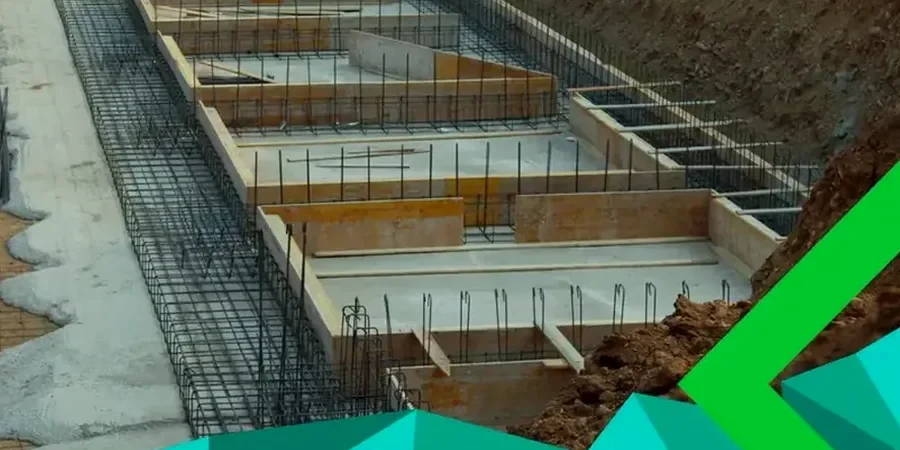
Typical technical challenges in Plymouth
Plymouth sits on a geological boundary between Devonian slates, Middle Devonian limestones, and Quaternary Head deposits that mantle the coastal slopes. The Head is a particular headache for shallow foundation design because it's a poorly sorted mixture of angular limestone clasts in a silty clay matrix, and its consistency varies wildly depending on how much water it's holding. Differential settlement is the real risk, not bearing failure. We've seen projects near Sutton Harbour where a strip footing on Head settled 18 mm more at one end than the other over the first dry summer, enough to crack blockwork before the roof was on. Our approach is to run a sensitivity analysis on the ground model early, identify zones where the compressibility contrast exceeds 1:3, and either specify a stiffer raft or localised ground improvement rather than hoping the soil sorts itself out.
Our services
The shallow foundation design package we deliver in Plymouth goes beyond a bearing capacity calculation. It's a complete geotechnical justification that a building control officer or warranty provider will accept without query.
Bearing capacity and settlement analysis
We determine the allowable bearing pressure for pad and strip footings under both ultimate and serviceability limit states, using site-specific ground parameters derived from CPT, SPT, and laboratory triaxial data. The output includes a factored bearing pressure table and a settlement curve so the structural engineer can pick a footing size with confidence.
Foundation-level risk register and ground model
We build a three-dimensional ground model for the footprint, flagging zones where the bearing stratum changes, where groundwater may cause construction difficulties, or where sulphate attack on concrete is a concern (common in the Plymouth limestone). The accompanying risk register gives the contractor clear mitigation measures before the first bucket goes in the ground.
Quick answers
How much does a shallow foundation design cost for a typical house extension in Plymouth?
For a single-storey extension or a small residential project in the Plymouth area, the design fee generally falls between £1.340 and £2.180, depending on the complexity of the ground conditions and the number of foundation elements. The price includes the geotechnical interpretive report, bearing capacity calculations to Eurocode 7, and the settlement analysis. A site with variable Head deposits or a high water table near the Plym or Tamar will sit at the upper end of that range because of the extra analysis required.
Do I always need a ground investigation before you can design the footings?
Yes, and it's not just a box-ticking exercise. BS EN 1997-2 requires that the ground model be based on physical investigation data, not assumptions. In Plymouth, the depth to competent rock can change by a metre across a garden plot, so we need at least a couple of trial pits or dynamic probe tests at footing invert level. Without that data, any design would have to be so conservative that it would cost more in concrete and steel than the investigation itself.
What's the difference between a shallow foundation and a piled foundation, and how do I know which one my Plymouth site needs?
A shallow foundation transfers building loads to the ground within about three metres of the surface using pads, strips, or a raft. Piles go deeper to reach competent strata or bypass soft near-surface soils. In Plymouth, if the weathered limestone or slate is within two metres of formation level and the allowable bearing pressure is above 100 kPa, shallow foundations are almost always more economical. Piling becomes necessary where the Head deposits are thicker than three metres, the groundwater is too high to excavate safely, or the bearing stratum is too compressible for a raft.
How long does the design process take from instruction to issued drawings?
Assuming the ground investigation data is already available, a straightforward shallow foundation design for a Plymouth residential project typically takes seven to ten working days from instruction to the final geotechnical design report. If we need to commission the trial pits or boreholes, the site work adds three to five days, and the laboratory testing (triaxial, oedometer, sulphate content) can add another two weeks. We keep the structural engineer in the loop throughout so there are no surprises when the foundation drawings land.