BS 5930:2015 and Eurocode 7 (BS EN 1997-2:2007) set the framework for ground investigation in the UK, and in Plymouth the geology demands strict adherence to these codes. The city sits on a transition zone between Devonian limestone to the north and Middle Devonian slates to the south, with tidal estuary deposits along the Plym and Tamar rivers. This mix creates variable bearing strata that standard penetration testing must characterise accurately. Site investigation without reliable SPT N-values in Plymouth can lead to over-excavation or underestimating settlement. When working near Sutton Harbour or the expanding Derriford area, we combine the SPT with a CPT test to refine the stratigraphic profile in the silty estuarine layers, ensuring the geotechnical model reflects the actual ground conditions.
SPT N-values in Plymouth's transition geology can jump from 6 to refusal within half a metre – that single data point changes the entire foundation strategy.
Methodology applied in Plymouth
Working video
Typical technical challenges in Plymouth
Plymouth recorded a population of 264,700 in the 2021 census, and with the Plymouth and South West Devon Joint Local Plan targeting over 19,000 new homes by 2034, pressure on marginal land is rising. Sloping sites in areas like Eggbuckland and the limestone valleys near Plymstock carry a hidden risk: variable rockhead depth. An SPT test terminated at shallow refusal can mislead a designer into assuming uniform rock when a karstic void or deeply weathered pocket sits two metres away. The limestone around Plymouth Sound is known to contain solution features, and the tidal range of up to 5.5 metres influences groundwater levels in near-shore boreholes. Omitting SPTs at close centres on such sites leaves uncertainty that no amount of desk-study geology can resolve.
Our services
Our Plymouth SPT testing forms part of a wider ground investigation capability. The two solutions below are the most commonly paired with standard penetration testing on local projects.
Dynamic Probe Testing
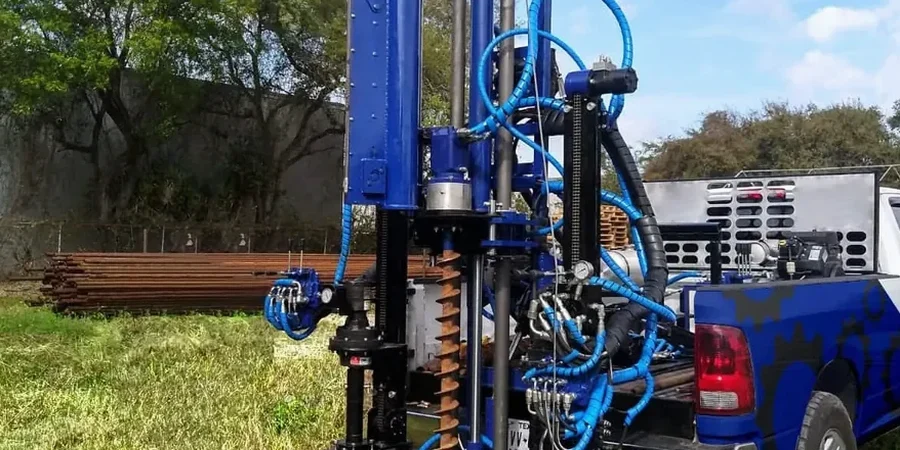
Where access restricts a full drilling rig – common in Plymouth's narrow terraced streets – we deploy dynamic probing to supplement SPT data. Continuous blow count profiles help correlate N-values between borehole positions.
Geotechnical Laboratory Testing
Disturbed samples recovered during SPT work go to our UKAS-accredited lab for particle size distribution and plasticity index determination. These index tests confirm the soil description logged in the field.
Quick answers
What depth do you typically drill for SPT work in Plymouth?
Most residential and light commercial projects need 8 to 12 metres. On sloping limestone sites we extend to 15 metres to confirm rockhead continuity. The depth is always agreed during the desk-study phase.
How much does an SPT investigation cost in Plymouth?
A typical investigation with two or three boreholes to 10 metres falls between £470 and £550 per borehole, including the factual report. This covers mobilisation within the Plymouth travel-to-work area, drilling, sampling, groundwater monitoring, and the AGS-format log.
Do you report the raw N-values or corrected values?
We report both. The field log shows raw N-values and seating drive blows. The factual report includes N60 values corrected for hammer energy ratio, rod length, and borehole diameter, following BS EN ISO 22476-3 procedures.
Can you work on occupied sites in Plymouth city centre?
Yes. We use restricted-access rigs for sites with limited headroom or narrow entry. Noise and vibration are managed under BS 5228, and we coordinate with the site manager to phase the drilling around ongoing operations.