Plymouth's waterfront isn't just a scenic asset—the estuarine silts of the Tamar and the historic tidal flats that lie beneath Millbay and the city centre present a very specific seismic hazard that most standard site investigations miss entirely. We've seen it on projects from Devonport to Sutton Harbour: loose saturated granular layers at 3 to 6 metres depth that, under the right cyclic loading, lose all effective stress. The 2018 induced seismicity event near the Dartmoor edge, though modest at 2.3 ML, reminded local engineers that the UK is not aseismic. Our liquefaction analysis integrates CPT testing data with laboratory cyclic triaxial to quantify the factor of safety against flow failure, because relying on SPT blow counts alone in Plymouth's interbedded alluvium gives you a false sense of security every time.
In Plymouth's estuarine silts, a CPT-based liquefaction assessment can reveal a factor of safety below 0.8 where SPT correlations alone suggest 1.3 or higher.
Methodology applied in Plymouth
- In-situ stress-normalised CPT tip resistance with soil behaviour type index Ic
- Fines content correction from lab grain size analysis on undisturbed Shelby tube samples
- Magnitude scaling factor calibrated to the UK seismic hazard model
- Post-liquefaction volumetric strain estimates for settlement prediction
Typical technical challenges in Plymouth
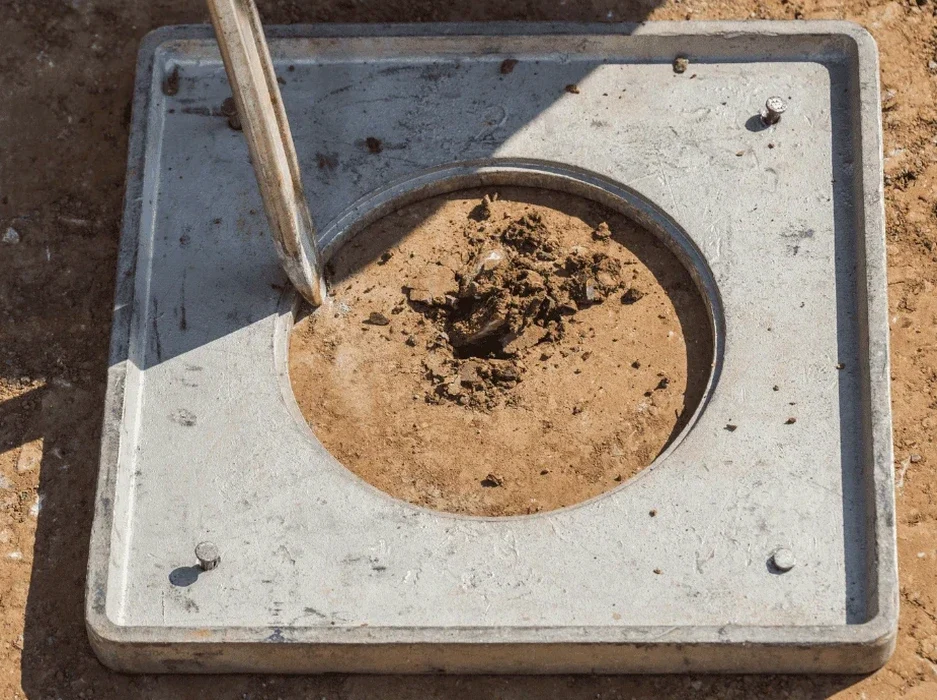
The most common mistake we see contractors make in Plymouth is treating the alluvium as a single homogeneous unit and running one simplified liquefaction spreadsheet for the whole site. The Tamar estuary deposits are lenticular—a sand lens can pinch out over 15 metres horizontally, and what passes a screening on the north side of a plot might trigger on the south. We've reviewed projects where the initial desk study missed the presence of tidal creek infill from the 19th century, mapped on old Admiralty charts but absent from modern geological maps. If you skip a proper test pit investigation to ground-truth the historical fill boundaries and don't pair it with a site-specific CPT campaign, you risk designing foundations that survive static loads but fail during cyclic mobility. The cost to remediate post-liquefaction settlement in a completed structure—underpinning, compaction grouting, or worse, demolition—dwarfs the upfront analysis budget by a factor of twenty or more.
Our services
Our liquefaction assessment in Plymouth follows a tiered approach aligned with the screening procedures in BS EN 1998-5. We don't just generate a report—we deliver actionable soil parameters for your structural engineer to use directly in the seismic design situation.
Full Liquefaction Hazard Assessment
Site-specific evaluation using CPTu data processed with the Robertson (2009) method, corrected for fines content from laboratory index testing. Includes cyclic stress ratio calculation, factor of safety profiling, and post-liquefaction settlement analysis using the Ishihara and Yoshimine (1992) volumetric strain model.
Ground Improvement Verification for Liquefaction Mitigation
Pre- and post-treatment CPT comparison for vibrocompaction or stone column installations. We quantify the increase in cyclic resistance ratio and verify that the target factor of safety—typically 1.25 for standard structures—has been achieved across the full treatment depth.
Quick answers
Does Plymouth really need liquefaction analysis? It's not an earthquake zone.
It's a fair question, but the UK experiences 200-300 earthquakes annually, and the British Geological Survey's seismic hazard model assigns a non-zero probability of a magnitude 5.5 event within a 50km radius of Plymouth over a 50-year design life. More critically, the loose saturated silts and sands along the Tamar estuary are exactly the materials that liquefy at relatively low peak ground accelerations—sometimes as low as 0.05g. For Category II structures on these soils, BS EN 1998-5 requires at minimum a screening assessment.
What's the typical cost range for a liquefaction study in Plymouth?
For a single residential or light commercial plot in the Plymouth area, a complete liquefaction assessment—including CPT sounding, laboratory cyclic triaxial on select samples, and the engineering report with factor of safety profiles and settlement estimates—typically falls between £2.230 and £3.490, depending on the number of CPT locations and whether fines content testing is required on multiple samples. Larger multi-storey schemes or sites with complex stratigraphy will push toward the upper end or beyond.
Can you use SPT data from an existing ground investigation for the liquefaction analysis?
We can, but we'd caution against relying on SPT alone in Plymouth's variable alluvium. The energy correction and the inherent scatter in blow counts—especially in silty sands where the N-value can shift from 8 to 22 over a 300mm interval—makes the cyclic resistance ratio estimate less reliable than a CPT-based approach. Our preference is always to supplement existing SPT logs with at least two targeted CPT soundings to calibrate the correlation and reduce the uncertainty in the factor of safety calculation.