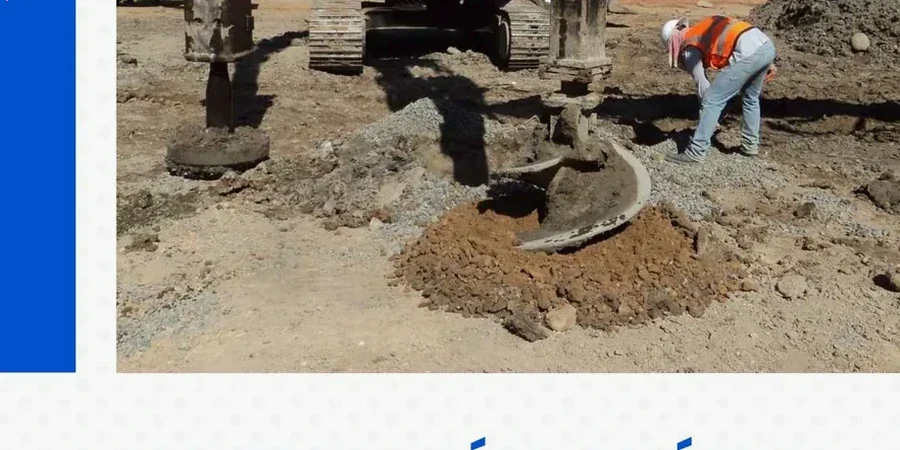
The first thing that arrives on-site in Plymouth is the vibroflot – a heavy cylindrical poker suspended from a crawler crane, its high-frequency vibrations transforming loose estuarine clay and silt into compacted stone columns. Plymouth's geology is a patchwork: Devonian limestone ridge to the north, weathered slate through the city centre, and thick alluvial muds along the Plym and Tamar estuaries. These soft deposits, sometimes exceeding 15 metres depth near Sutton Harbour, demand precise stone column design to manage settlement and bearing failure. Our laboratory team executes the full design chain: from in-situ permeability testing in tidal zones to triaxial strength assessment of the aggregate backfill, ensuring every column installation matches the ground conditions encountered. The maritime climate accelerates degradation; we factor in aggressive sulphate exposure from estuarine pore water when specifying drain characteristics and stone durability.
A well-designed stone column grid in Plymouth's estuarine muds can reduce total settlement by over 60 percent while accelerating primary consolidation through radial drainage.
Methodology applied in Plymouth
Typical technical challenges in Plymouth
BS EN 1997-2:2007 and BS 5930:2015 mandate a ground investigation that adequately characterises the full depth of compressible strata before any ground improvement design proceeds – in Plymouth, this is especially critical. The city's coastal and riverside zones conceal buried tidal channels, soft lenses, and variable bedrock depth; a stone column terminated short of competent bearing stratum creates a punching shear risk under embankment or raft loading. We've observed untreated organic silts beneath proposed floor slabs in the Cattedown area where the groundwater table sits within 1 metre of the surface, producing excessive long-term creep settlement when columns are under-designed. Lateral displacement during vibro-replacement near quay walls and historic masonry structures – of which Plymouth has hundreds – also requires careful sequencing and monitoring to avoid serviceability damage to adjacent assets.
Our services
Our Plymouth laboratory provides the complete geotechnical design package for vibro stone column projects, from initial desk study through to post-treatment verification. Each deliverable is prepared by chartered engineers familiar with the ground conditions across the city's distinct geological zones.
Column Design and Settlement Analysis
Full analytical design using Priebe and finite element methods for embankments, raft foundations, and warehouse slabs in soft alluvial ground. Includes consolidation rate predictions and staged loading sequences.
Aggregate Suitability Testing
Laboratory assessment of proposed backfill stone to BS EN 932 and BS EN 933: Los Angeles abrasion, magnesium sulphate soundness, and flakiness index testing to ensure durable, free-draining columns in sulphate-bearing estuarine environments.
Post-Installation Verification
In-situ plate load testing per BS 1377 to confirm modulus and settlement performance, combined with CPT profiling through installed columns to verify continuity and diameter, plus cross-hole dynamic probing where access permits.
Quick answers
What depth of soft ground can stone columns treat in Plymouth?
Stone columns are viable in compressible soils from roughly 2 metres to depths exceeding 20 metres, provided a competent bearing layer exists at the base. In Plymouth's estuarine zones along the Plym and Tamar, we typically design columns penetrating the full thickness of soft alluvium to refusal on limestone bedrock or dense gravel. Depths of 10 to 18 metres are common near the waterfront; the exact termination criterion is established through CPT refusal data correlated with rotary core logs.
What does stone column design cost for a Plymouth site?
Design fees for a stone column ground improvement scheme in Plymouth generally range from £1,220 for a straightforward single-structure assessment to £4,260 for a comprehensive package covering settlement analysis, liquefaction mitigation checks, and post-treatment verification on larger commercial or residential plots. The scope includes site characterisation, column grid layout, improvement factor calculations, and the specification for post-installation testing.
How do you verify the performance of installed stone columns?
Performance verification follows a three-stage protocol. We execute pre-treatment CPT soundings to establish the baseline undrained shear strength profile, then post-treatment CPT tests through the centre of installed columns to confirm continuity and tip resistance improvement. Finally, zone load tests using a rigid plate of at least 1.5 times the column spacing evaluate the composite modulus of the treated ground, with acceptance criteria referenced to the serviceability settlement limits in the design report.
Can stone columns be used near Plymouth's historic quay walls?
Yes, but with stringent vibration and lateral displacement controls. Near heritage structures such as the Barbican quays or Royal William Yard, we specify low-energy vibro-replacement techniques, often with pre-augering through the upper crust, and install inclinometers and vibration monitors to track real-time ground response. The column installation sequence is staggered away from sensitive facades, and the design limits peak particle velocity to values agreed with the local conservation officer.